Home / Kitchen Drawer Organization
Kitchen Drawer Organization
Start with what gets used at the stove
Stand at the cooktop and notice what your hands reach for during a normal dinner. A spatula, a wooden spoon, tongs, a ladle, salt, a whisk, oil. Most kitchens keep these in a drawer three steps away, or in a crock on the counter that collects grease. A better plan is to give the drawers closest to the range and the prep area the jobs that happen there, and move everything else outward by how often it is used.
That single idea, sorting by action rather than by object type, is the foundation of a drawer plan that keeps working. Pots live where they are used to cook, knives live where food is cut, and food storage containers live near the place leftovers are packed. A kitchen laid out this way does not rely on a person remembering where things are, because the location already makes sense.
Why drawers beat doors for lower storage
A base cabinet with a door and a fixed shelf hides everything at the back. To reach a stockpot, you kneel, move three other items and slide it out around the door frame. A drawer in the same space brings the whole contents forward and shows them from above. Nothing is lost behind anything else. For that reason, many designers suggest swapping most lower door cabinets for wide drawers, particularly beside the range and next to the dishwasher.
The trade-off is that drawers need a full-height box and hardware, so they take a little more of the budget and slightly reduce the very tallest storage. For most households the daily convenience outweighs that, especially for older cooks or anyone with a sore back.
Drawer heights and what fits in each
Match the drawer height to the contents. Shallow drawers, roughly three to four inches inside, are suited to flatware, small utensils, a few spices laid on their sides and kitchen gadgets. Medium drawers handle mixing bowls, plastic containers and baking sheets stored on edge. Deep drawers hold pots, lids, small appliances and bulk food bags. Putting a ladle in a shallow drawer is a nuisance because the handle will not lie flat, and putting a single whisk in a deep one wastes the space above it.
A common layout for a three-drawer base is a shallow top drawer, a medium middle and a deep bottom. Cabinet makers offer this as a standard stack, and the stack is one of the best uses of a thirty or thirty-six inch wide base.
Dividers that earn their place
An undivided drawer slowly turns into a pile. Dividers keep each category in its own lane. Several types suit different jobs:
- Cutlery trays in bamboo or plastic, sized to the drawer width so they do not slide.
- Adjustable bars held by tension, good for lids stood on edge.
- Peg boards that hold plates and bowls in a deep drawer so they cannot shift when it closes.
- Angled spice inserts that tilt jars so labels face up.
- Custom wood dividers glued into the drawer by the cabinet maker for a permanent fit.
Measure the inside of the drawer, not the front. The slide hardware often cuts into the usable width by a half inch on each side, and a tray ordered from the front measurement will not seat. Shelf liner underneath the trays reduces noise and keeps things from creeping.
A drawer for pots, a drawer for food
Pots and pans are the heaviest things in the kitchen, and they are also the awkward ones. A wide, deep drawer with pegs or adjustable dividers lets each pan stand upright with its lid beside it. Stacking pans on top of each other buries the one needed, and scrapes nonstick surfaces. Store the lids vertically in a narrow slot or a rack at the side.
Food can live in drawers too. A pantry-style pull-out holds cans and boxes in rows. A deep drawer near the prep area can store potatoes and onions in ventilated bins, away from light. A drawer near the refrigerator can hold dry goods in labeled containers, so the cook sees what is running low without opening a tall door. Keep anything that attracts pests in sealed containers, since a drawer is a closed space where crumbs go unnoticed.
Utensils, knives and the awkward tools
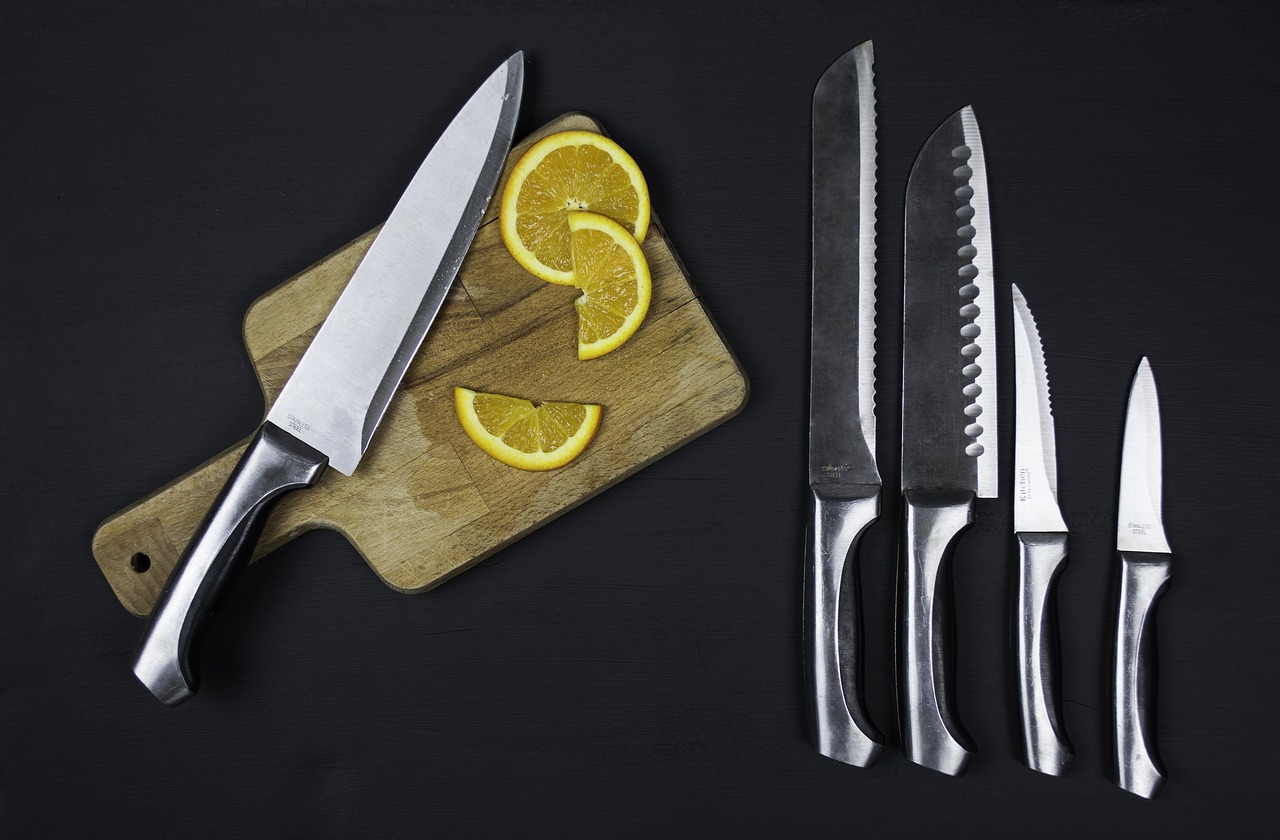
A knife block takes counter space and dulls blades if they rest on the edge. An in-drawer knife tray holds blades flat, protects the edges and keeps the handles within reach. Put it near the cutting area and away from the drawers children open. A narrow pull-out beside the range can hold long spoons and cooking oil, and a tray drawer can hold rolling pins and long tools that would otherwise rattle.
The awkward items, such as a garlic press, a peeler or a lemon squeezer, belong in a shallow drawer close to prep with a clear tray of their own. A junk drawer is not a failure if it has a boundary. Give it a small insert so it stays small.
Reaching into corners
Corner base cabinets are the hardest to organize, and drawers do not turn corners. Lazy susans spin shelves so the back is reachable. Blind corner pull-outs swing items out of the dark. Some layouts avoid the problem by ending a run of drawers at the corner and using a filler panel, which sacrifices a few inches but avoids the wasted dead space. If a corner must be used, a pull-out shaped to the cabinet turns a cave into a usable shelf.
For readers working through where these storage pieces fit in a full layout, the longer project articles on kitchen and bath remodeling riverside field show how drawer stacks, corners and appliance gaps come together in real rooms.
Weight, slides and soft close
A loaded pot drawer can hold a lot of weight, so the slides must be rated for it. Look for full extension slides, which let the drawer come out all the way so the back is as reachable as the front. Soft close mechanisms slow the last few inches so a drawer does not slam, which also protects the dishes inside. Check that the drawer box is a solid material with strong joints, since a thin stapled box can sag under the load and start to rub the cabinet.
Keep a system, not a collection
A drawer plan only works if it has limits. Each drawer has a purpose and a capacity. When a new gadget arrives, something leaves. A seasonal clean once or twice a year takes out duplicates, broken tools and the container with no lid. This habit matters more than any insert, because a perfect organizer filled to the brim stops being an organizer.
A simple way to plan before ordering
Take everything out of the old kitchen and sort it into piles by task: cooking, baking, prep, serving, storing, cleaning. Count the items in each pile, measure the tallest and the widest, and match each to a drawer height. Draw the stack on paper, and mark which drawers sit nearest the range, sink and refrigerator. Hand that sketch to the cabinet designer. A plan based on real belongings leads to storage that fits the household that uses it.
Finally, consider who uses the kitchen. Children should have a low drawer of their own for plastic cups and snacks. Anyone with limited reach benefits from heavier items in the upper drawers of a base stack, close to waist height. Left-handed cooks may prefer utensils on the other side of the range. Small choices like these make a drawer system feel natural.